Aquaculture & Marine Ranching Monitoring Systems
Built for offshore cages, shrimp ponds, hatcheries, and marine ranches — with dissolved oxygen, pH, salinity, turbidity, algae, and underwater video integrated through one platform.
Zenocean provides modular sensors, data loggers, telemetry, power systems, and cloud software for aquaculture and marine-ranching monitoring.
Operational risks in aquaculture & marine ranching
Field operators face conditions that change quickly. Real-time monitoring reduces manual workload and lowers operational risk.
Low dissolved oxygen
Sudden DO drops cause fish stress, feed-conversion loss, and in severe cases mortality across an entire cage or pond.
Algae and water-quality risk
Blue-green algae and chlorophyll spikes change oxygen dynamics and signal incoming water toxicity events.
Salinity and temperature swings
Tide changes, rainfall, and seasonal shifts move salinity and temperature outside the species-tolerance window.
Manual inspection cost
Routine site visits to remote cages or ponds are slow, expensive, and miss fast-changing water conditions.
Poor underwater visibility
Without underwater video, cage damage, escape events, and fish behavior changes are detected too late.
No real-time alarm
Without remote alarm rules, low-oxygen or pump-failure events are not actionable until the next manual check.
Key parameters for this industry
| Category | Parameters |
|---|---|
| Water Quality | Dissolved OxygenpHSalinityConductivityTemperatureTurbidity |
| Biological Risk | ChlorophyllBlue-Green AlgaeAmmonia / NH4ORP |
| Weather | Wind speedWind directionAir temperatureHumidityRainfall |
| Visual Monitoring | Underwater cameraCage inspectionFeeding observation |
| System Status | Battery voltageSolar chargingCommunication status |
Zenocean systems for aquaculture & marine ranching
Each system can be configured to suit pilot deployments, operational monitoring, or large engineering projects.
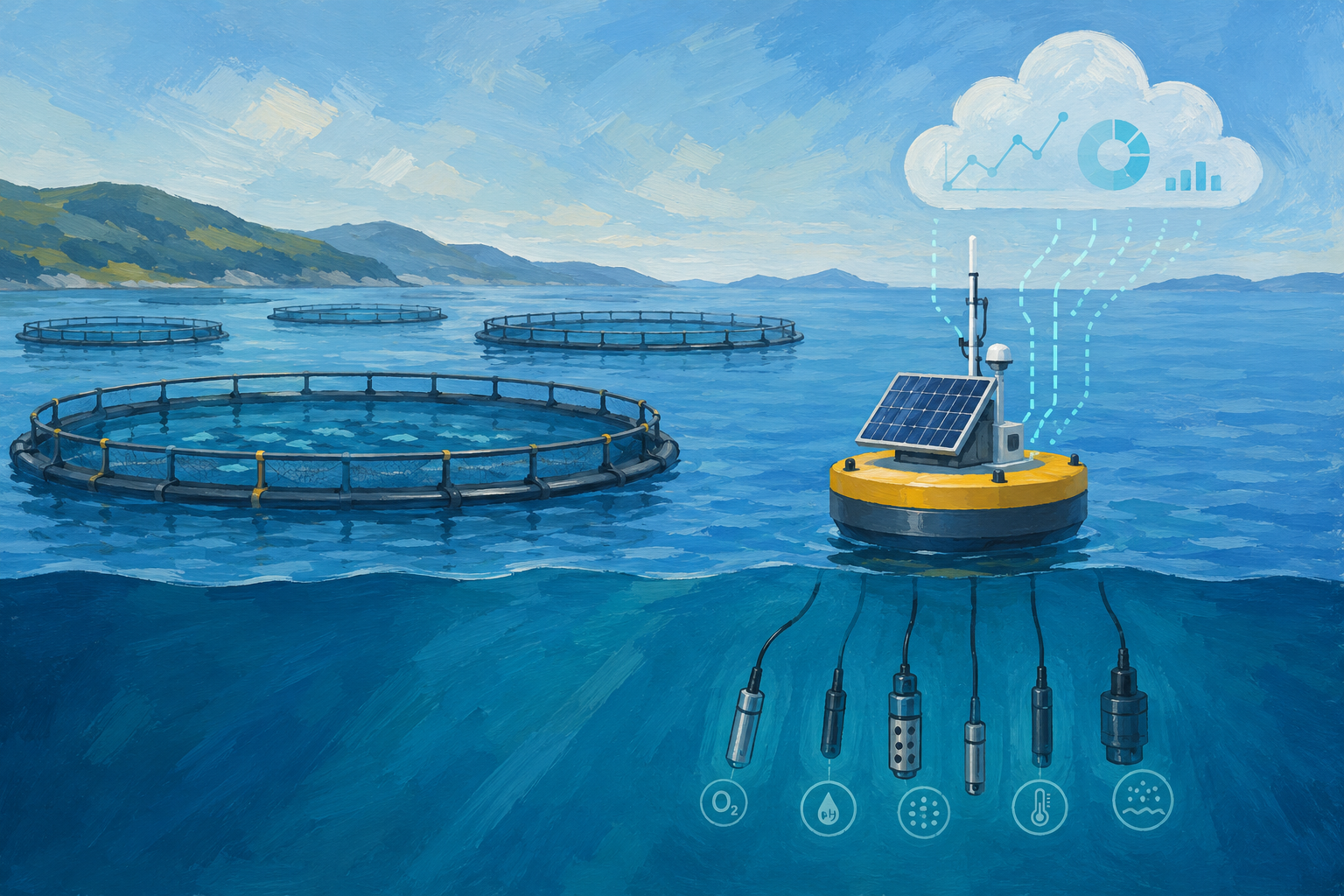
Aquaculture Monitoring
Water quality visibility, alarms, and remote oversight for ponds, raceways, cages, and recirculating systems.
View Solution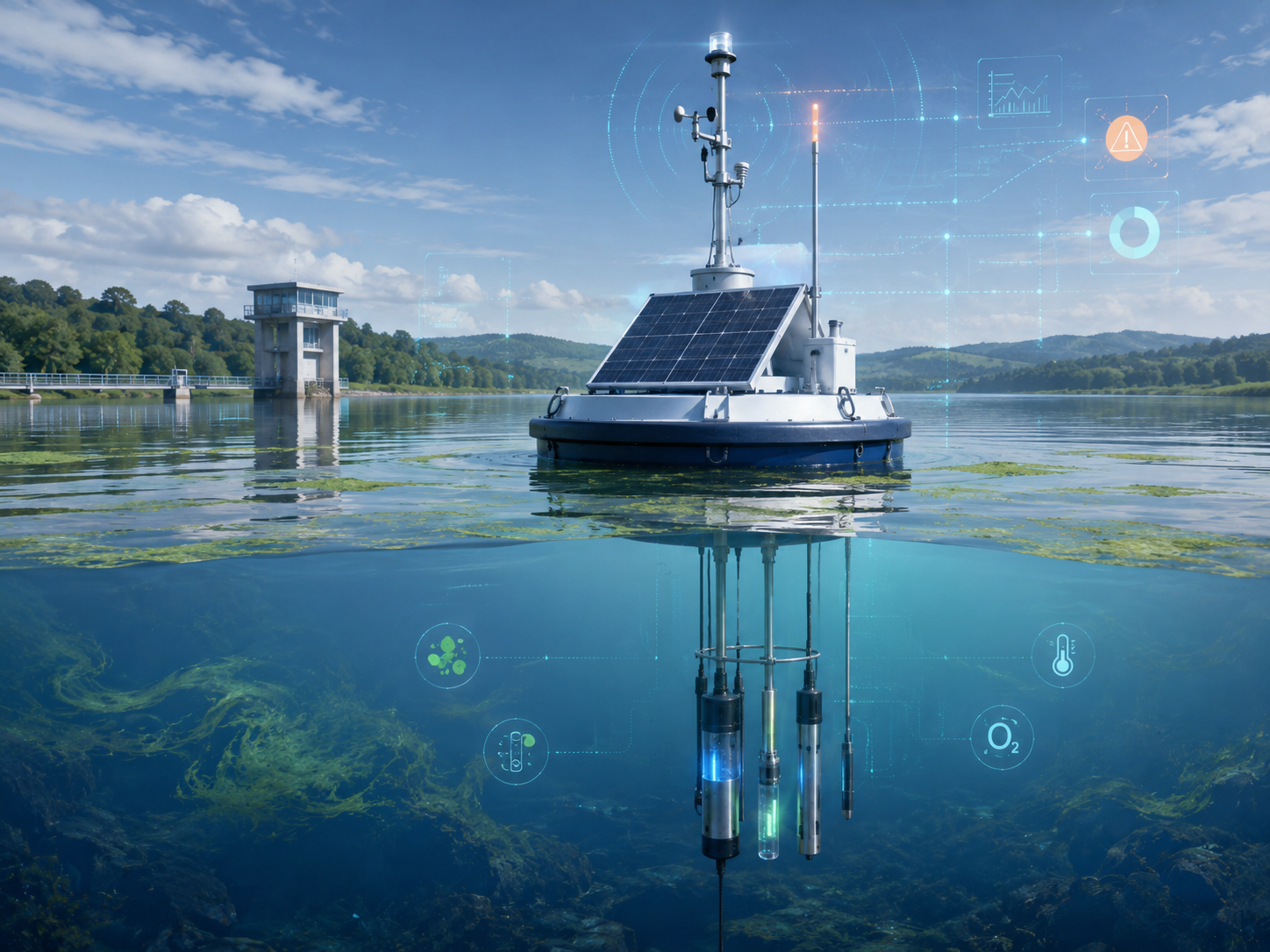
Water Quality Monitoring
Online water quality stations for rivers, lakes, reservoirs, drinking water sources, wastewater discharge, and industrial process water.
View Solution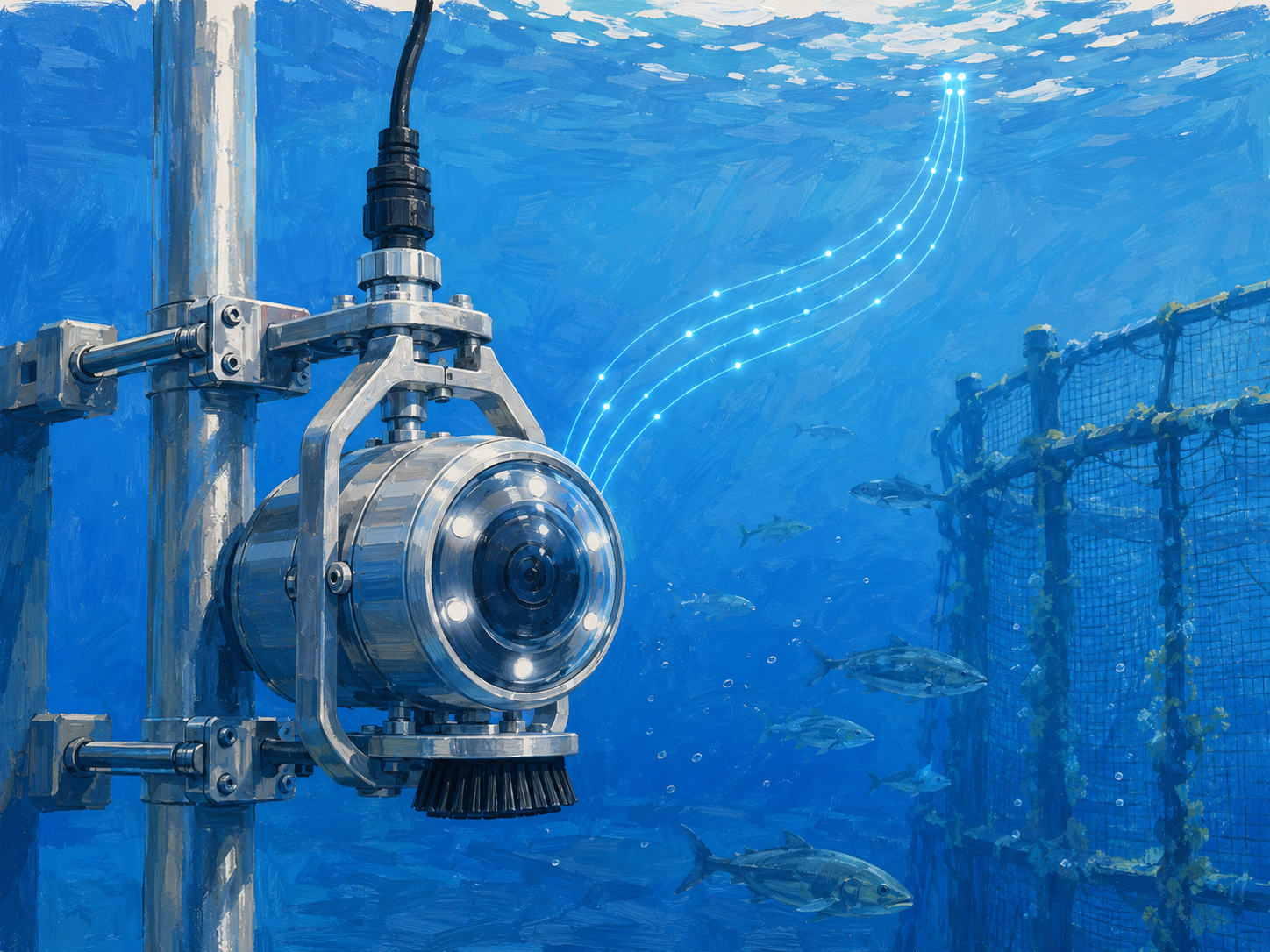
Underwater Observation
Seabed platforms, underwater cameras, and visual monitoring systems for aquaculture, marine ranching, research, and infrastructure inspection.
View Solution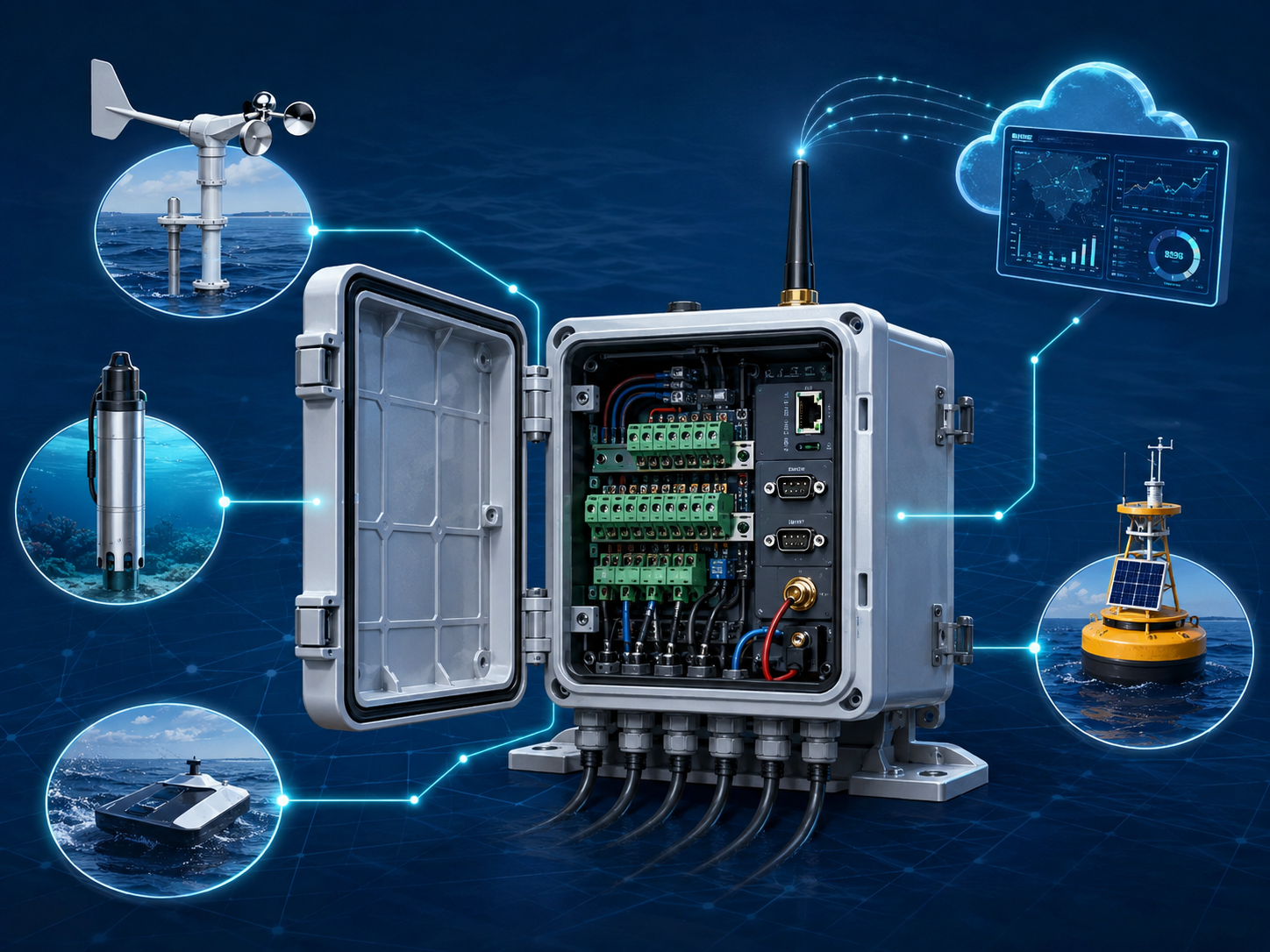
Data Logger & Telemetry
CoreLink data logger, 4G RTU, and solar telemetry cabinet packages for sensor integration across any Zenocean field project.
View SolutionSensor-to-cloud, end to end
Zenocean delivers complete monitoring systems — not isolated devices. The architecture below adapts to the deployment environment for this industry.
Where these systems are deployed
Offshore fish cages
Smart buoy platform + DO / pH / salinity / turbidity sonde + underwater camera + 4G telemetry.
Shrimp pond
Fixed pole station + DO + pH + temperature + salinity sensors + CoreLink 4G RTU + solar power.
Marine ranching
Observation buoy + multi-parameter sonde + chlorophyll/algae sensors + underwater camera + cloud dashboard.
Hatchery and indoor culture
Online multi-parameter analyzer + DO / pH / conductivity + local 7-inch HMI display.
From pilot to project scale
Each package can be project-configured. Final sensor count, power options, and telemetry depend on site conditions.
Pilot deployments and small farms
DO + pH + temperature sensors, CoreLink 4G RTU, cloud dashboard with low-oxygen alarm.
Request configurationOperational monitoring of working sites
DO + pH + salinity + turbidity + temperature, solar power, alarm rules, data export and reports.
Request configurationMulti-site farms and marine ranching projects
Smart buoy + multi-parameter sonde + algae + underwater camera + cloud platform with API access.
Request configurationA system provider, not a parts catalog
Zenocean engineers the full stack — sensors, logger, power, telemetry, and software — so each project ships as a working monitoring system.
- ✓ Aquaculture-grade sensors with anti-fouling and self-cleaning options
- ✓ Modular CoreLink RTU supports multiple sensors on one telemetry node
- ✓ Solar-ready buoy and fixed-station platforms for offshore and pond sites
- ✓ Cloud alarms tuned to aquaculture thresholds (low DO, salinity, temperature)
- ✓ OEM/ODM and private-label support for system integrators
Hardware and software modules
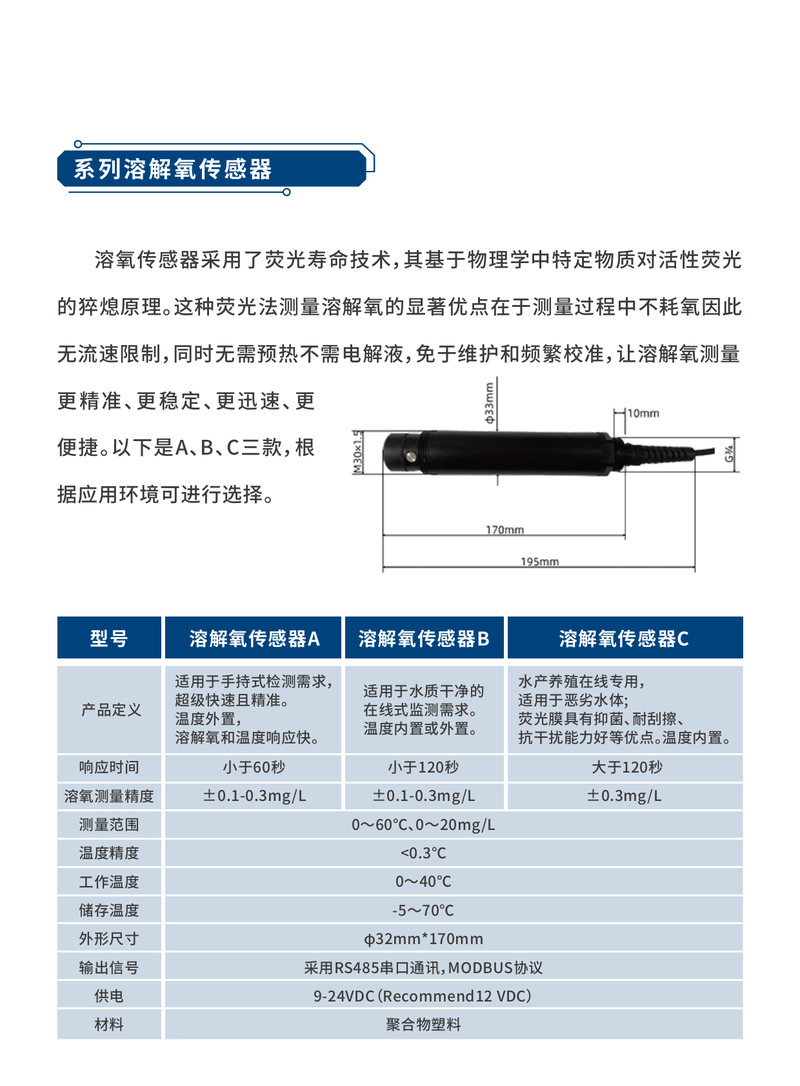
AS-DO-20
AquaSense
AS-DO-20 Optical Dissolved Oxygen Sensor
Fluorescence-method dissolved oxygen sensor with three field-tuned variants for portable, fixed wastewater, and aquaculture deployment.
View Product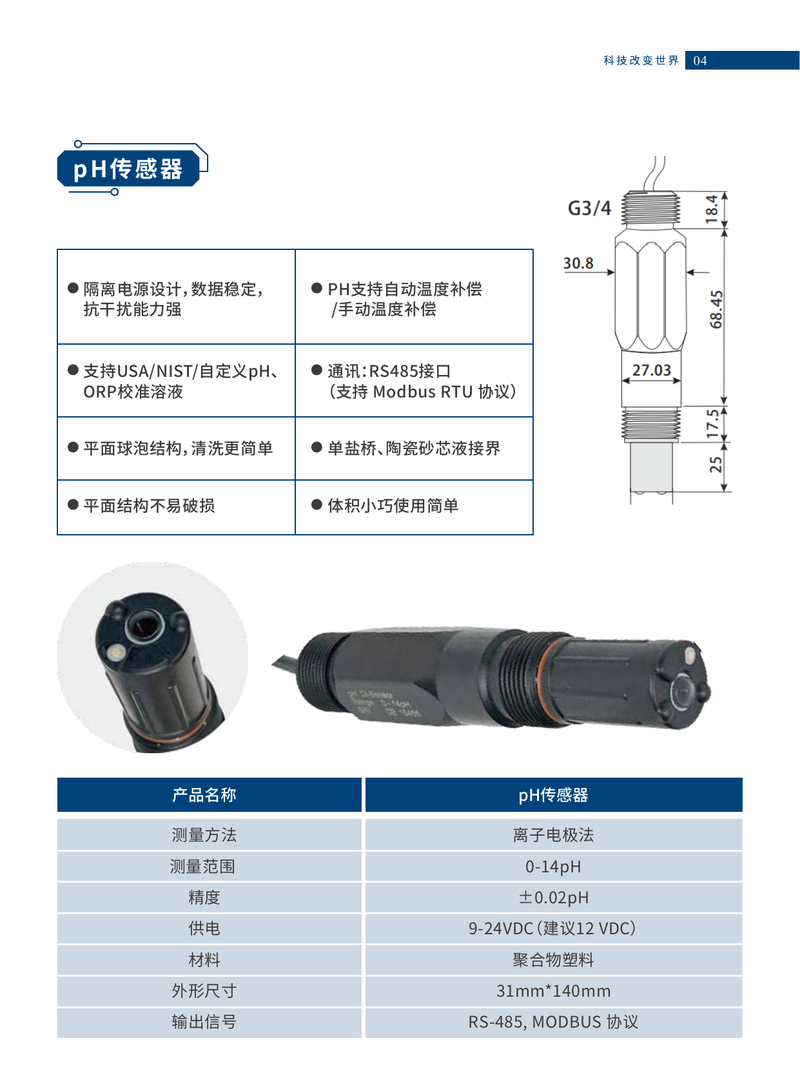
AS-pH-14
AquaSense
AS-pH-14 Digital pH Sensor
Industrial digital pH sensor with isolated power, automatic temperature compensation, and Modbus RTU output for continuous online monitoring.
View Product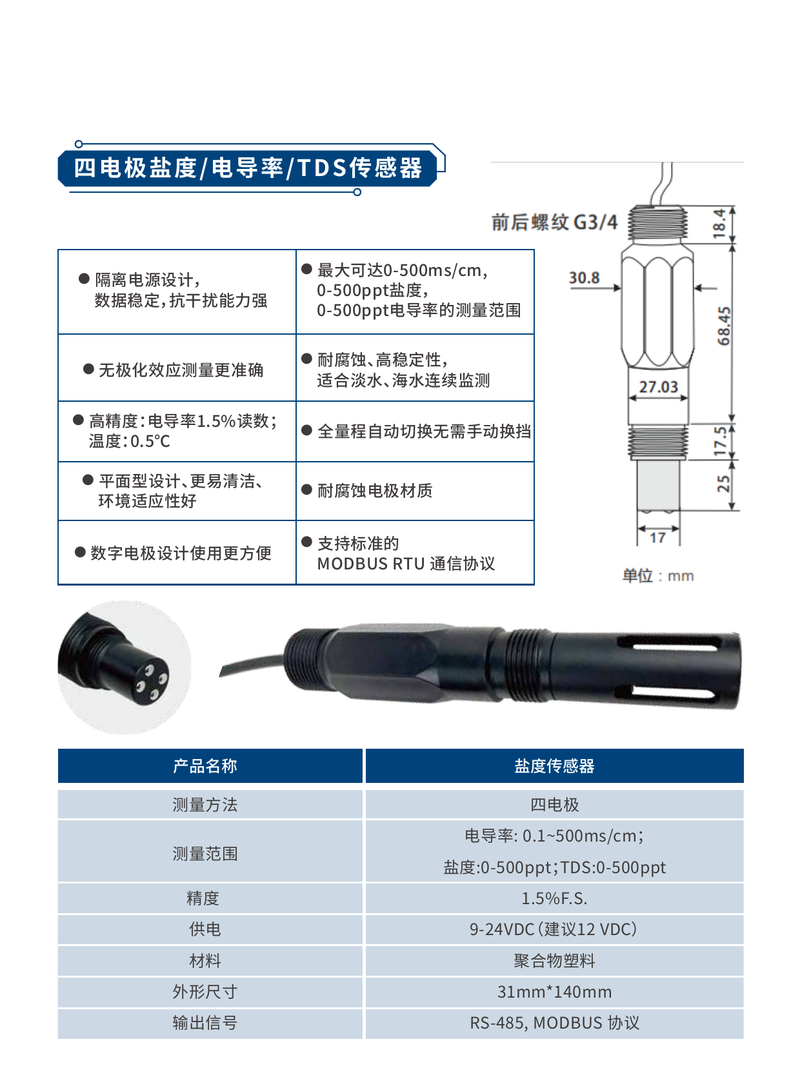
AS-SAL-500
AquaSense
AS-SAL-500 Four-Electrode Salinity / Conductivity / TDS Sensor
Four-electrode salinity, conductivity, and TDS sensor for marine, brackish, and high-conductivity water, with auto temperature compensation.
View Product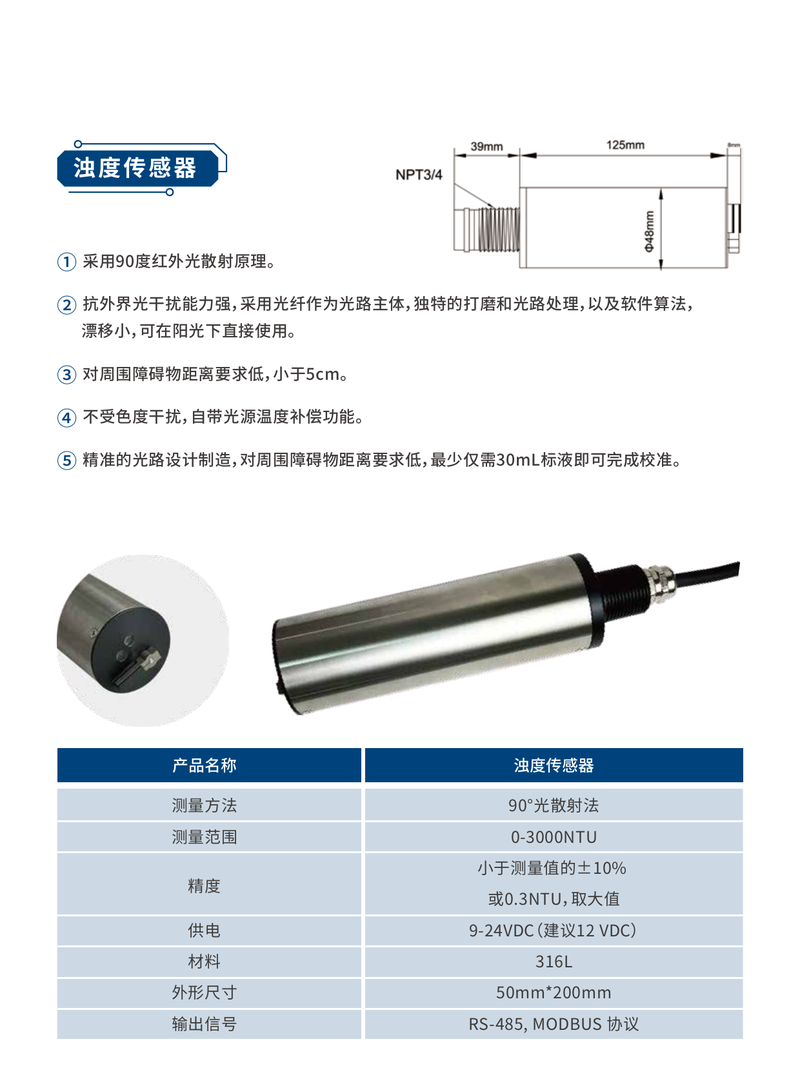
AS-TUR-3000
AquaSense
AS-TUR-3000 Turbidity Sensor
90° infrared scattering turbidity sensor (ISO 7027) with 316L body, 0–3000 NTU range, and ±10% accuracy for surface, drinking, and wastewater monitoring.
View Product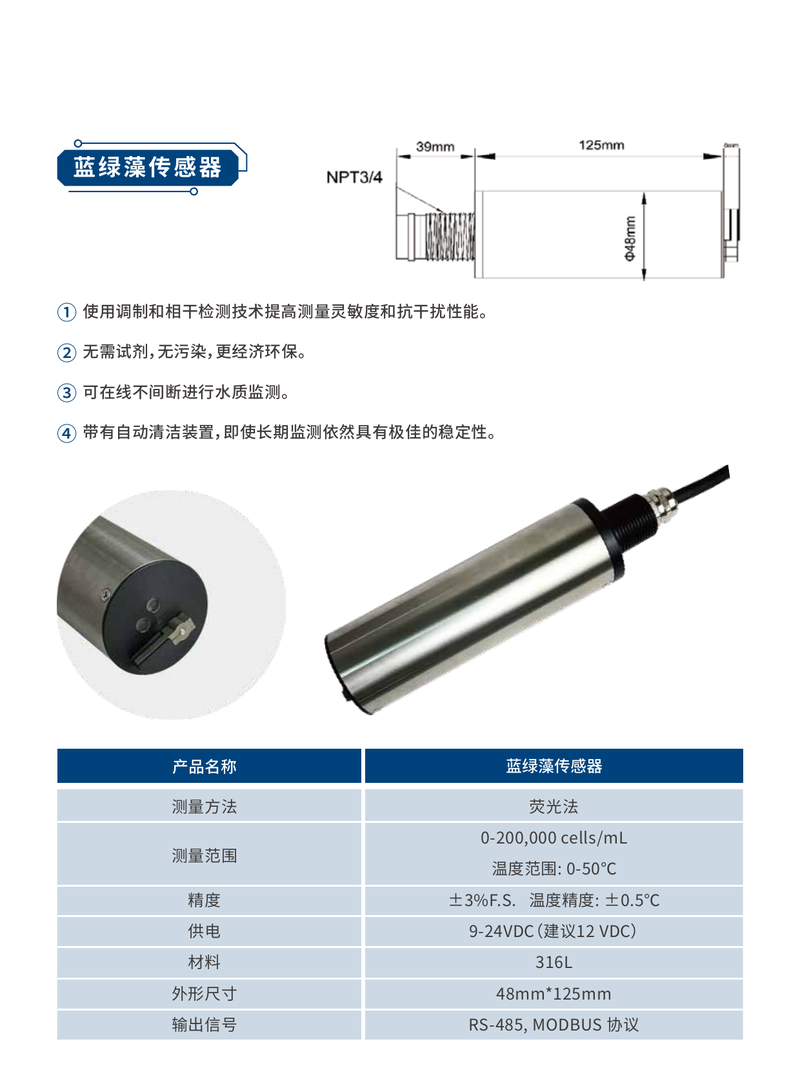
AS-BGA-200K
AquaSense
AS-BGA-200K Blue-Green Algae (Cyanobacteria) Sensor
Phycocyanin fluorescence sensor for cyanobacteria detection with 0–200,000 cells/mL range, 316L body, and Modbus RTU output.
View Product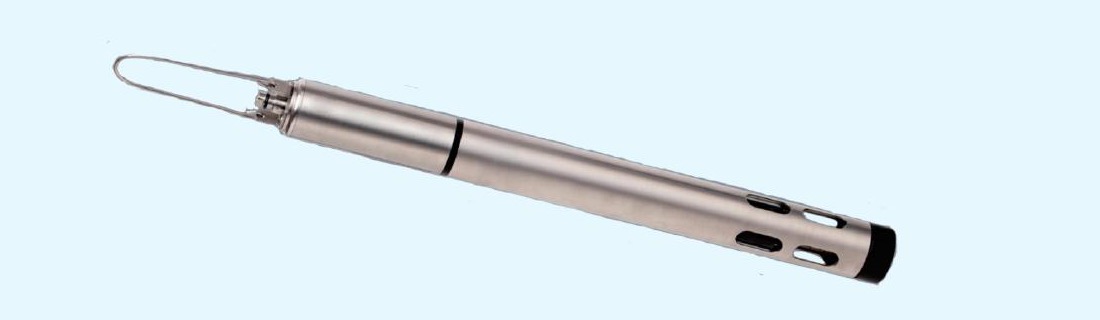
ASD-MP-05
AquaSonde
5-Slot Multi-Parameter Water Quality Sonde
57 mm 5-slot multi-parameter sonde — the balanced mid-size body in the AquaSonde range.
View Product
CL-RTU-4G
CoreLink
Remote Telemetry Unit
Telemetry unit for sending field data from remote monitoring points back to the cloud.
View Product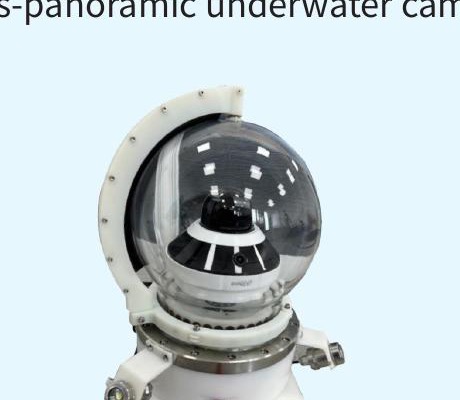
AV-360-100
AquaVision
AV-360-100 Self-Cleaning 360° Underwater Camera
Smart 360° PTZ underwater camera with brush-based self-cleaning, adaptive LED, and edge IoT payload support.
View ProductFrequently asked questions
What parameters are most important for aquaculture monitoring?
Dissolved oxygen, temperature, pH, salinity, turbidity, and algae-related parameters are the core set. Specific species and water type may add ammonia, ORP, or trace DO.
Can the system send low-oxygen alarms?
Yes. Threshold rules in CoreLink Cloud can trigger SMS, app, and email alarms — and local relay outputs for on-site aerators or pumps.
Can the buoy work with solar power?
Yes. Smart buoys and remote stations can be configured with solar panel + battery sized for the site latitude and sensor load.
Can Zenocean connect multiple sensors to one RTU?
Yes. CoreLink data loggers and 4G RTUs support multi-channel RS485 / Modbus / analog inputs, so a single node aggregates the full sensor stack.
Can the dashboard be customized for our project?
Yes. CoreLink Cloud supports project-specific dashboards, alarm rules, user roles, and white-label branding for system integrators.
Is the system suitable for seawater cages and freshwater ponds?
Yes. Sensor variants and enclosures are selected for the deployment medium — saltwater offshore, brackish coastal, or freshwater inland.
Need a monitoring system for your aquaculture & marine ranching site?
Tell us your monitoring parameters, deployment environment, power condition, and communication requirement. Zenocean will recommend a project-configured system.